Earth Day is a human holiday, but its consequences echo far beyond human borders.
For those of us who measure time in seasons, snowmelt and meadow bloom, Earth Day is more than just a date on a calendar. It is a reminder that the fate of wild places and the creatures who depend on them is shaped by human choice.
This year, I want to pause and speak about members of the marmot family, my alpine cousins, who have stood at the very edge of disappearance. The Vancouver Island marmot, a charismatic species found nowhere else on Earth, is not just a conservation statistic. It is a species whose whistles once rang across mountain meadows and nearly fell silent within a single generation.
Their story is one of peril, persistence and the extraordinary effort required to bring a species back from the brink.
On this Earth Day it feels right to talk about second chances.
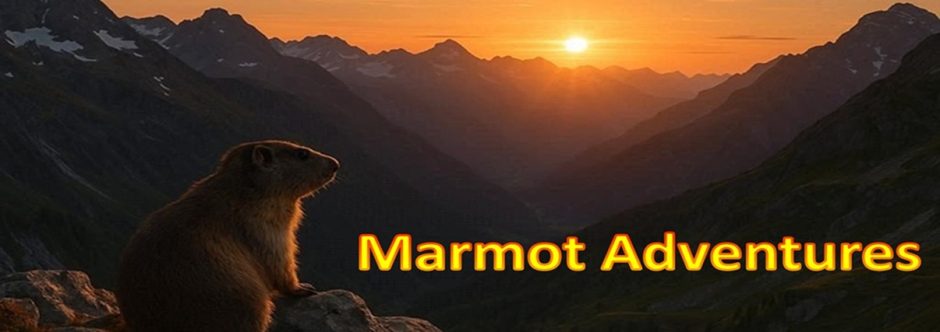
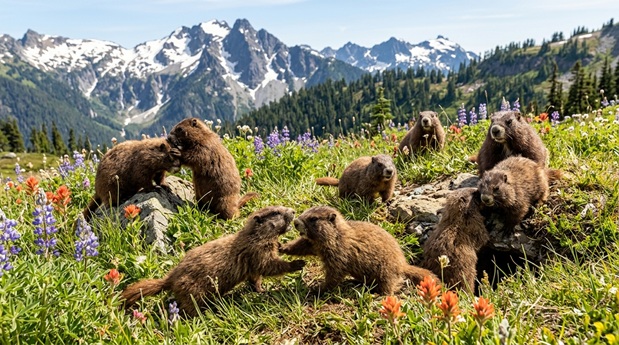
High in the sub-alpine meadows of Vancouver Island, a small chocolate-brown marmot stands upright on a rocky outcrop, scanning the horizon. Twenty years ago, that sight was almost unthinkable.
In 2003, the Vancouver Island marmot, one of Canada’s most endangered mammals, was down to just 22 known individuals in the wild. Fewer than 30, by most estimates. An entire species reduced to a number small enough to fit inside a classroom.
Today, there are 420 Vancouver Island marmots living in the wild, marking a hard-won comeback that serves as a beacon of hope for conservationists everywhere.
That number represents decades of work, heartbreak, innovation, stubborn hope and an extraordinary collaboration between conservationists, donors, field technicians, zoos, researchers and everyday people who chose not to give up.
This number also represents something fragile.
From Five Colonies to Thirty-Seven
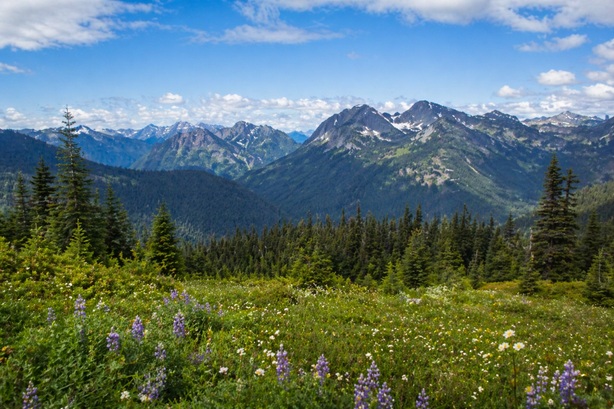
At their lowest point, Vancouver Island marmots survived in just five wild colonies. Today, they occupy 37 colonies across more mountains than they have in decades. This isn’t just a win for the numbers. It’s a win for the landscape.
For the second year in a row the project has recorded its highest wild population counts ever, fueled by back-to-back years of record-breaking reproductive success. In 2025 alone, twenty colonies produced a record 116 pups.
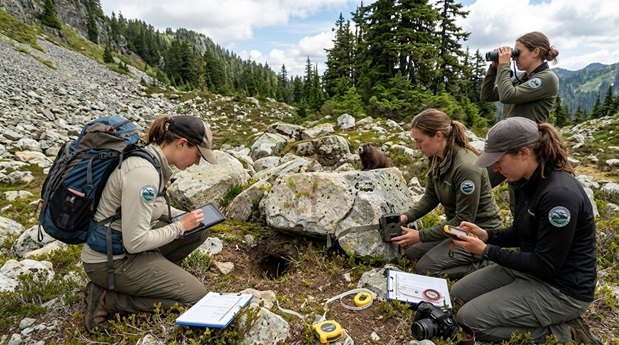
That expansion is no small feat. Marmots are social animals that depend on family groups and suitable meadow habitat. Rebuilding colonies means more than simply releasing animals. It requires careful monitoring, supplemental feeding, predator management, habitat assessment and long-term commitment.
The Marmot Recovery Foundation (MRF) has led this effort with a small but deeply dedicated team. And they have done so largely with public support: more than 75% of MRF’s funding comes from donations.
This is conservation powered by community.
The Joy and the Caution in the Numbers
There is real cause for celebration. Marmots are breeding successfully in the wild. Pups are emerging from burrows. Colonies are growing.
There is a unique joy in seeing these animals recolonize their historic homes. The Strathcona metapopulation, in particular, has seen rapid growth due to the “stepping-stone” methodology, which supports marmots as they establish new colonies and bridge the gap between populations. Last year, field teams even confirmed marmot persistence at North Island sites like Mount Cain and Mount Seth, colonies once feared to be lost.
But the data tells a nuanced story. Success brings its own set of cautions.
Right now more than 50% of the wild population is either a pup of the year or one year old. That youthfulness is a sign of reproductive success, but it also carries risk.
While this high birth rate is fantastic, like most wildlife, young marmots face high mortality rates as they navigate their first few years in the wild. Many will not survive to adulthood at three or four years of age. That means recovery work is far from finished. Releasing captive-bred marmots into the wild and supporting colonies through supplemental feeding will remain essential for years to come.
Hope, in conservation, is rarely a straight line. It is always a climb.
A Changing Mountain
The challenges don’t end with age demographics. A changing climate is literally shifting the ground beneath the marmots’ paws.
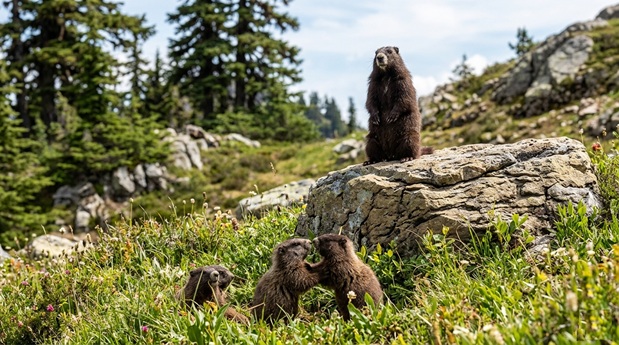
Vancouver Island marmots live in sub-alpine meadows shaped by snow creep and avalanches. Historically, deep snowpacks would slide down mountainsides, scraping away young trees and maintaining an open meadow habitat perfect for marmots.
But climate change is reshaping that balance.
In many years, snowpacks are significantly smaller than they once were. With less snow movement, trees are encroaching upward into the meadows, gradually converting open habitat into forest where marmots can not survive due to increased predator cover and lost sightlines.
The mountain itself is changing.
Restoring a species in the face of habitat transformation is complex, uncertain work. It requires flexibility, research and long-term thinking.
Moving Forward Together
Despite these challenges, the story of the Vancouver Island marmot is one of resilience, both human and marmot alike.
To combat these threats, the Marmot Recovery Foundation is taking direct action:
- Habitat Restoration: Teams are manually removing young trees to reopen meadows and restore the long sightlines marmots need to spot predators.
- Supplemental Feeding: Providing “leaf-eater biscuits” in the early spring helps females maintain the body condition needed to raise successful litters.
- Conservation Breeding: The program continues to release dozens of captive-bred marmots annually to bolster wild numbers.
This work is a community effort. Beyond financial support, hikers and backcountry enthusiasts serve as vital “eyes on the mountain”. Reporting sightings is more important than ever as marmots disperse into new, unmonitored territories.
This Earth Day, the story of the Vancouver Island marmot reminds us that while extinction is forever, recovery is possible when we choose to act. The mountain remembers its marmots and with your help, their whistles will continue to echo across the peaks for generations to come.
With marmots now recolonizing more mountains, MRF’s small team can not be everywhere at once. Hiker reports have been invaluable in identifying new or returning colonies and helping biologists track the species’ spread across its historic range.
Conservation, in this case, is not distant or abstract. It is personal. It is participatory.
Earth Day and the Long View
Earth Day often celebrates pristine landscapes and charismatic wildlife, but the deeper meaning of the day lies in commitment, in choosing to repair what is broken, even when the outcome is uncertain.
The Vancouver Island marmot is no longer on the brink in the way it was in 2003. That alone is extraordinary, but recovery is not a single milestone. It is a sustained promise.
Four hundred and twenty marmots stand where twenty-two once did. Thirty-seven colonies dot the mountains where five struggled to survive. The meadows still echo with whistles.
The work continues, steady, hopeful and grounded in the belief that extinction does not have to be inevitable.
And on Earth Day, that feels like something worth standing up for.
How You Can Help the Vancouver Island Marmot
The recovery of the Vancouver Island marmot is a community effort and your involvement makes the difference between a whistle and silence on the mountain. Recovery is working, but it is far from finished.
If you would like to support the return of the Vancouver Island marmot, there are meaningful ways to get involved:
- Donate.
More than 75% of the Marmot Recovery Foundation’s funding comes from public donations. Every contribution directly supports field monitoring, habitat work, supplemental feeding, research and the continued release of marmots into the wild. - Report sightings.
If you are hiking or camping in Vancouver Island’s backcountry and see a marmot, report it. With marmots now living on more mountains than they have in years, public sightings are incredibly valuable in helping biologists locate new or recolonizing colonies. - Learn more and share the story.
More than ever, conservation success depends on awareness. The more people understand the challenges and the progress, the stronger the foundation for long-term recovery becomes.
For those of us with paws in the dirt and ears to the mountain wind, Earth Day is a day that carries the weight of survival. The Vancouver Island marmots do not know the date, but they know the thinning of the snow and the creeping shadow of the forest.
The Vancouver Island marmot’s future is brighter than it was two decades ago, but it remains a shared responsibility. Every donation, every sighting report, every conversation helps keep these alpine whistlers on the mountain.
A Note of Thanks
Special thanks to Adam Taylor, Executive Director of the Marmot Recovery Foundation, for his generous support, insight and collaboration in the writing of this article. His guidance and the Foundation’s ongoing work make stories like this possible, not just on Earth Day, but every day, ensuring the Vancouver Island marmot remains a vibrant part of our planet’s heritage.
Discover more from Marmot Adventures
Subscribe to get the latest posts sent to your email.